ChatGPT, an artificial intelligence, has recently accomplished a remarkable feat in the medical field. A study published in the journal Annals of Emergency Medicine reports that this AI, used in the emergency room of a hospital in the Netherlands, was able to make diagnoses as precise, or sometimes more precise, than those made by doctors .
Dutch researchers believe this advance could potentially revolutionize the medical sector. However, they also highlight the limitations of the study. Although ChatGPT can indeed speed up the diagnosis process, it cannot yet completely replace human judgment and experience in the medical field.
Concretely, the study focused on thirty cases treated in a Dutch emergency department in 2022. The researchers provided ChatGPT with patient histories, laboratory test results and doctors' observations, asking it to propose five diagnoses possible. In 87% of cases, the correct diagnosis was among the AI's suggestions. Experts noted that it was capable of performing medical diagnoses in a manner similar to a human doctor.
It is important to emphasize that this research does not conclude that computers will one day take control of emergency services. On the contrary, it highlights the complementary role that AI can play in assisting doctors, particularly in situations of intense stress. AI can help with diagnosis and even suggest ideas that doctors might not have thought of. However, the issue of medical data confidentiality remains a significant concern.
It should also be noted that ChatGPT has limitations. Its reasoning can sometimes be medically inconsistent, which can lead to incorrect information or misdiagnoses, the study points out. In addition, the researchers admit certain shortcomings in their work, notably the small size of the sample studied and the simplicity of the cases examined.
 Sophie de Duiéry Sophie de Duiéry
|
 20/09/2023 |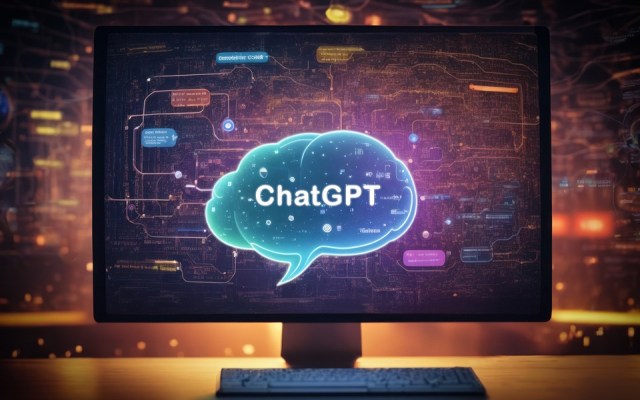















































 Anglais
 Arabic
 Deutsch
 Français
 Español
 Italien
 Português
 Russian