Various age-related histochemical changes contribute to the apparent dehydration, atrophy, and loss of elasticity that characterize aging skin at the subcutaneous, epidermal, and dermal levels.
Understanding these changes
In the subcutaneous tissue, there is a reduction in the size of hyaluronic acid (HA) polymers. In the epidermis, there is a marked decrease in HA, leading to a loss of skin hydration. In the dermis, HA is still present, but it loses its properties. Added to this is the constant loss of collagen with age.
Changes in elasticity
The consequences of decreased HA content in aging skin lead to alterations such as loss of support for microvessels, the appearance of wrinkles and fine lines, and changes in elasticity.
Hyaluronic Acid and Glycerol
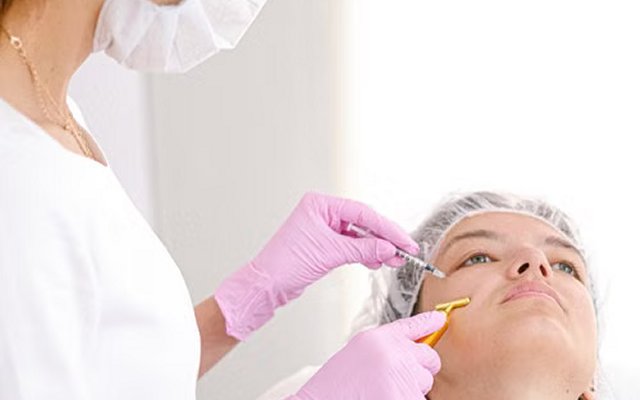
Injecting biocompatible and fully absorbable molecules into the superficial dermis using an injectable gel implant containing 18mg/ml hyaluronic acid and 20mg/ml glycerol helps you achieve firmer, brighter, and better-hydrated skin.
Skin Aging Improvement
Hyaluronic acid improves skin radiance, reduces roughness, and effectively improves the signs of aging. Glycerol is a powerful moisturizing agent that plays a role in skin elasticity and enhances the action of hyaluronic acid.
 Didier Galibert Didier Galibert
|
 08/02/2021 |













































 Anglais
 Arabic
 Deutsch
 Français
 Español
 Italien
 Português
 Russian